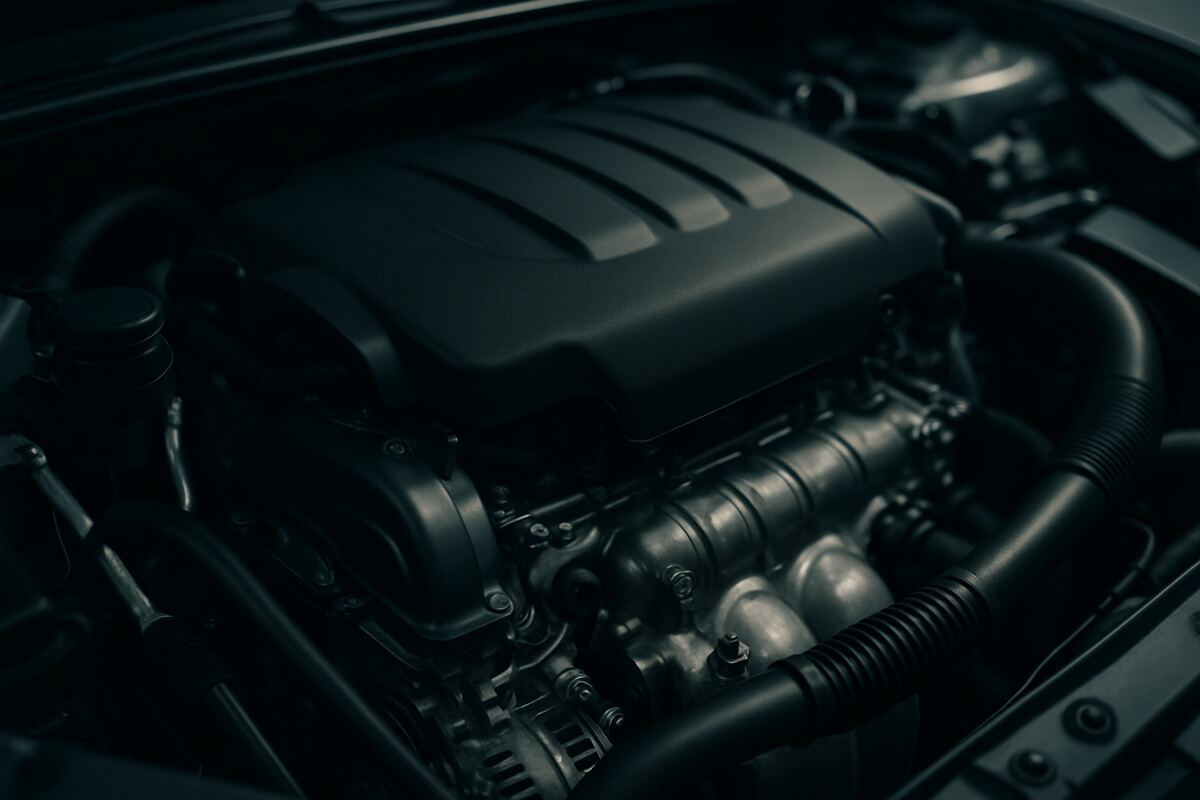
What 'powertrain' actually covers
Standard manufacturer powertrain warranties cover the components that propel the vehicle, engine, transmission, and the driveline (driveshaft, differentials, axles). Specifically included:
Engine: internals (pistons, rings, valves, valvetrain, head, block), oiling system, cooling system pump, timing chain/belt mechanism, intake/exhaust manifolds, fuel injection system (sometimes excluded, check your manual).
Transmission: automatic transmission torque converter and internals, manual transmission internals, CVT internals (including the variator and pulley assembly), the transmission control module.
Driveline: driveshaft, transfer case (4WD/AWD vehicles), differential and final drive, axle shafts.
What's specifically NOT covered
Powertrain warranties typically EXCLUDE: spark plugs, fluids/oils/filters (wear items), clutches (manual transmissions, wear item), brakes (not powertrain), exhaust system after the catalytic converter (sometimes), and any component damaged by lack of maintenance or modification.
Be careful with 'lack of maintenance' denials. Manufacturers will sometimes deny a powertrain claim citing missed scheduled service. The defense often falls apart when you produce the service records, but it's a common bad-faith move that's worth fighting.
Standard powertrain coverage periods
Most US manufacturers: 5 years / 60,000 miles.
Hyundai / Kia / Genesis: 10 years / 100,000 miles (the marketing 'best in the industry' powertrain).
Tesla: 8 years / 120,000 miles (drive unit warranty) and 8 years / 120,000 miles on the battery.
Mercedes-Benz, BMW: typically 4 years / 50,000 miles, shorter than US makes.
Our warranty period checker shows which powertrain warranties are still active for your specific vehicle.
Common powertrain defect cases
Hyundai / Kia Theta II engine, engine seizure and rod-bearing failure on 2.0L and 2.4L gas engines. Multiple recalls and a class settlement; many consumers still have individual MMWA claims. Read more.
Honda 1.5L turbo oil dilution, fuel mixing with engine oil, causing wear and elevated oil levels. Honda issued a TSB but resisted recalls; lemon-law claims continued.
Ford 6.0L Powerstroke diesel, head-gasket and EGR cooler failures. Long history of MMWA litigation.
CVT failures (Nissan, Honda, Subaru, Toyota), early failures on CVT-equipped vehicles, often outside the warranty window but inside the SOL.
Using powertrain coverage in a lemon-law claim
If your bumper-to-bumper has expired but your powertrain hasn't, the defect must affect a powertrain-covered component to be a lemon-law claim under that coverage. Engine block crack? Yes. Infotainment screen freezing? Not powertrain, bumper-to-bumper would need to still be active.
Federal MMWA covers all written warranties, so the powertrain warranty is sufficient on its own to invoke MMWA's repair-attempt and fee-shifting framework. Many of our most successful cases run entirely on powertrain coverage.
Have a defective vehicle? Find out if you have a case.
Case eligibility quiz. We tell you whether the facts support a federal MMWA or state lemon-law claim.
Take the case eligibility quiz →