Check Engine Light Keeps Coming Back? When Repeat Codes Become a Lemon-Law Claim
A check engine light that returns with the same codes after repeated repairs can support a lemon-law or Magnuson-Moss Warranty Act claim if the underlying defect is covered by warranty and substantially impairs the car. Visits where the dealer only cleared the codes can still count as repair attempts, so get the codes on every repair order.
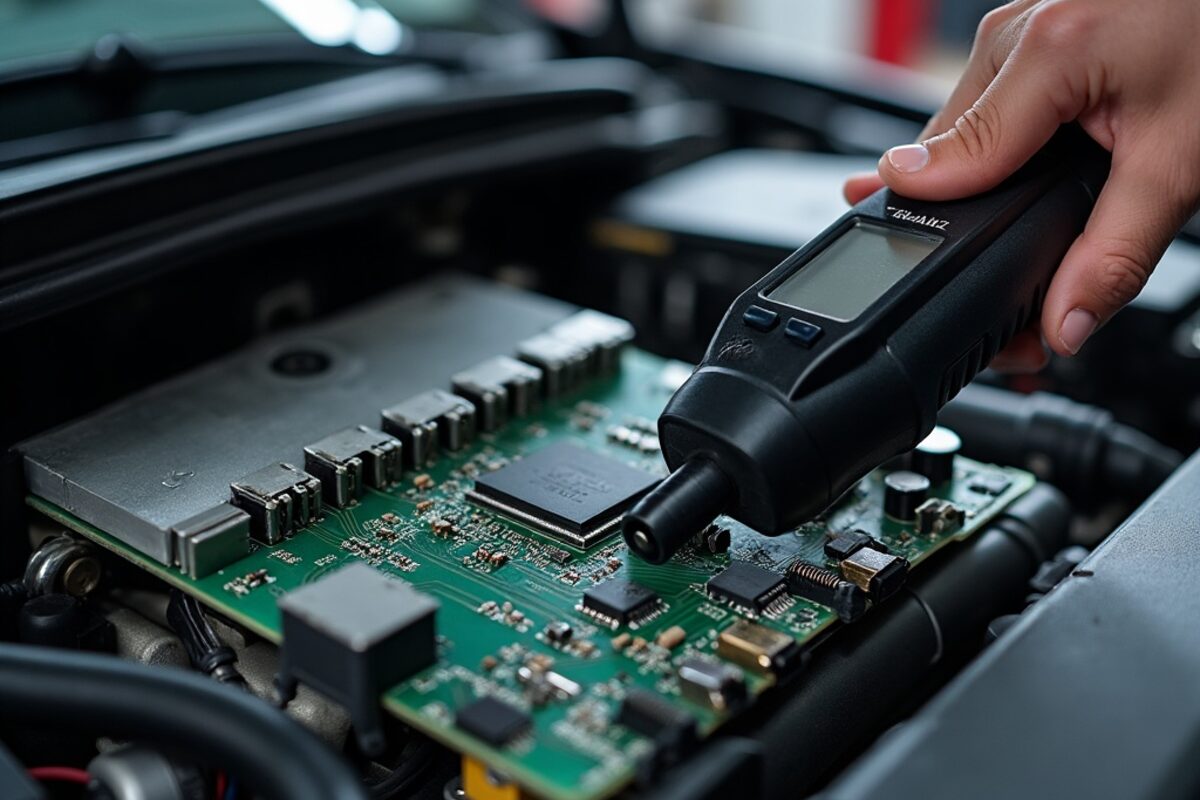
Same codes, same light, another visit? See whether your repair history supports a claim.
Take the case eligibility quiz →Can a check engine light that keeps coming back make a car a lemon?
The light itself is not the defect. It is the car's computer reporting that something in the engine, fuel, ignition, or emissions system is outside its expected range. The defect is whatever keeps triggering it: a misfire, a faulty sensor, a leak in the evaporative system, a failing module, or a problem the dealer has not found yet.
That distinction matters because lemon laws and the federal Magnuson-Moss Warranty Act look at whether the manufacturer fixed the defect, not whether the light went off for a week. When the same diagnostic trouble codes return after repair after repair, that pattern is strong evidence that the same problem was never fixed. Whether it reaches a claim depends on your state's test, the number of attempts, the time out of service, and how the defect affects the car. Our guide to reasonable repair attempts explains how those tests are measured.
Why should the codes be on every repair order?
Codes are what tie separate visits together. A repair order that says "customer states check engine light on" is weak on its own. One that lists the same code on the first, second, and third visits shows a single recurring defect. Before you leave the dealer, check that the repair order includes:
- The date in and date out, and the mileage
- Your complaint in your own words, including the check engine light
- Every diagnostic trouble code the technician retrieved (for example, a code that starts with P0)
- What the technician did: replaced a part, reprogrammed a module, or cleared codes
If the dealer will not print the codes, write them down from the scan or ask the service advisor to add them. A photo of the dashboard with the light on, and the date, helps too. Our guide on how to document repair attempts covers the rest of the paper trail.
Does it count if the dealer just cleared the codes?
Often, yes. Lemon laws generally measure whether you gave the manufacturer a chance to repair the defect, and bringing the car in for the problem is that chance. A visit where the dealer cleared the codes, found "no problem," or said the light was within normal limits can still be a repair attempt in many states, as long as the repair order shows you reported the problem. How a particular state counts those visits depends on its statute and the facts. Our article on what to do when the dealer says no problem found goes deeper.
Clearing a code without fixing the cause also tends to make the light return. When it does, go back and get another repair order.
Is the check engine problem covered by the emissions warranty?
Many check engine lights trace back to emission-related parts, and those carry their own federal warranty. Under the Clean Air Act, 42 U.S.C. 7541(i), emission-related parts on light-duty vehicles are warranted for 2 years or 24,000 miles. The catalytic converter, the electronic emissions control unit, and the onboard emissions diagnostic device are warranted for 8 years or 80,000 miles. On vehicles covered by California's emissions warranty, the California Air Resources Board lists 3 years or 50,000 miles for emission parts and 7 years or 70,000 miles for listed high-cost parts.
That can keep a recurring code under warranty after the basic warranty ends. Check your coverage with our warranty period checker, and see our pages on emissions defects and computer module defects. Under MMWA, which applies nationwide to consumer products with a written warranty, a covered part that cannot be fixed after a reasonable number of attempts may support a claim. If you win, 15 U.S.C. 2310(d)(2) allows the court to award reasonable attorney fees and costs.
When is a check engine defect serious enough?
Most lemon laws require that the defect substantially impair the use, value, or safety of the car. A light by itself may not meet that test. The defect behind it often does. Signs that it may:
- The light flashes. Many owner's manuals say a flashing light signals a misfire that can damage the catalytic converter and tell you to reduce speed or stop driving.
- The car stalls, hesitates, loses power, or goes into a reduced-power mode.
- The car cannot pass a required emissions inspection, which can block registration renewal in states that require one.
- The recurring code lowers what a buyer or dealer would pay for the car.
What to do when the light comes back
- Take it to an authorized dealer each time, not a quick-lube shop, so the visit is a warranty repair attempt.
- Get the codes on the repair order and keep every copy.
- Log each visit in our repair attempt log, including days without the car.
- Check for recalls and service bulletins with our recall lookup tool.
- Talk to a lawyer before you sign any goodwill agreement or release.
Frequently asked questions
How many times does the check engine light have to come back before I have a lemon?
There is no single number. State lemon laws set their own repair-attempt and days-out-of-service tests, and MMWA uses a reasonable-opportunity standard. The same codes returning after several repairs is a common pattern in these claims, but results depend on the facts.
The dealer cleared the codes and sent me home. Does that visit count?
It may. Many states count a visit where you presented the car for the problem, even if the dealer only cleared codes or found nothing, as long as the repair order shows your complaint. Make sure the complaint and codes are written on it.
Do different codes count as the same problem?
Sometimes. Different codes can come from the same underlying defect, such as a failing sensor or module. A technician's diagnosis, service bulletins, and the repair history help show whether they are connected.
My basic warranty expired. Is my check engine problem still covered?
Possibly. Federal law warrants emission-related parts for 2 years or 24,000 miles, and the catalytic converter, electronic emissions control unit, and onboard diagnostic device for 8 years or 80,000 miles. Check your warranty booklet for your vehicle's coverage.
Can I keep driving with the check engine light on?
A steady light often allows careful driving to the dealer, but a flashing light can signal a serious misfire. Follow your owner's manual and get it inspected promptly. Continuing to drive with a known problem can give the manufacturer an argument against coverage.
Sources
- 42 U.S.C. 7541, compliance by vehicles and engines in actual use (Cornell LII)
- California Vehicle and Emissions Warranty Periods (California Air Resources Board)
- 15 U.S.C. 2310, remedies in consumer disputes (Cornell LII)
Check engine light won't stay off?
A few questions on your vehicle, your repair orders, and your warranty. Free. We tell you whether the facts support a lemon-law or MMWA claim. Results depend on the facts of each case.
Take the case eligibility quiz →